

When sniffles, coughs and fatigue show up, it’s natural to wonder what’s behind your symptoms.
Is it the flu? A common cold? Seasonal allergies? While these illnesses can share similar signs, there are a few key differences that can help you understand what your body may be dealing with and what to do next.
The good news: in many cases, you don’t need to know the exact cause right away to take appropriate action. Paying attention to how symptoms start, how severe they feel, and how they change over time can guide your next steps and help you know when to seek care.
Why Symptoms Can Be Confusing
Flu, colds and allergies often overlap, especially early on. Fatigue, congestion and cough can appear across all three, which is why it can feel hard to tell them apart at first.
What often makes the difference is how quickly symptoms begin, how intense they are, and whether they improve or worsen over several days.
Our side-by-side symptom chart offers a helpful visual reference to compare common signs and patterns.
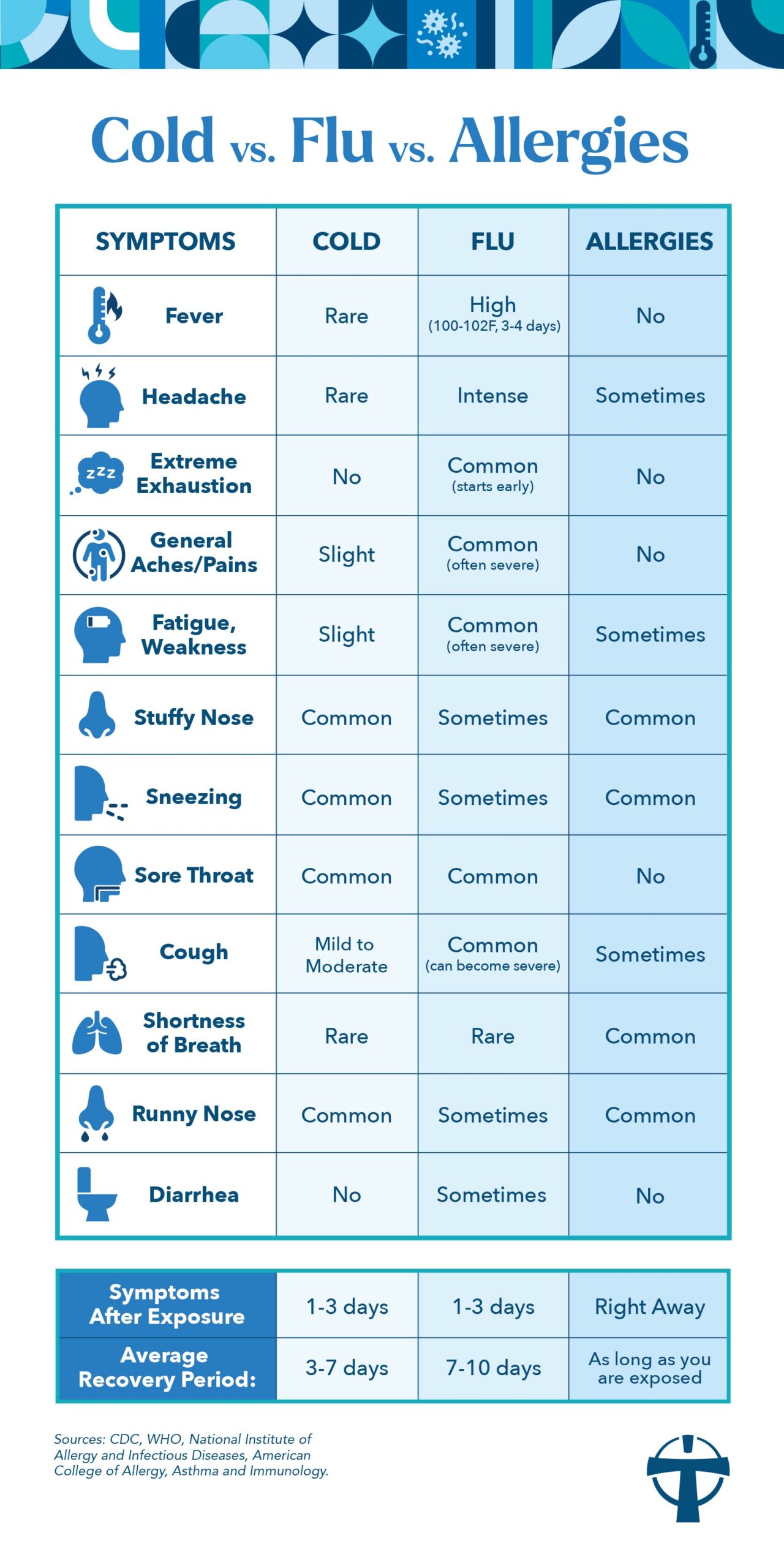
How the Flu Typically Feels
The flu usually comes on suddenly. Many people can pinpoint the moment they started feeling sick.
Flu symptoms are often more intense and may include fever, chills, headache, body aches, significant fatigue or weakness, along with cough or sore throat. These symptoms can make everyday activities difficult for several days.
Most people recover from the flu within seven to 10 days, though lingering fatigue can last longer.
What Sets a Cold Apart
Colds usually develop gradually and are often milder than the flu.
Symptoms often center on the upper respiratory tract, such as a stuffy or runny nose, sneezing, mild cough or sore throat, along with lower energy levels. Fever and body aches are less common, and many people begin to feel better within a few days.
When It’s More Likely Allergies
Allergies are triggered by environmental factors like pollen, dust or mold, not a virus. That means they don’t cause fever or body aches.
Common allergy symptoms include sneezing, congestion or a runny nose, itchy eyes, nose or throat, and symptoms that persist as long as exposure continues. If symptoms improve with allergy medication or flare during certain seasons or environments, allergies may be the cause.
What Matters Most: How You Feel Over Time
No matter the cause, it’s important to listen to your body. Worsening symptoms, trouble breathing, persistent fever or difficulty staying hydrated are signs to seek medical care.
Many mild respiratory illnesses can be managed at home with rest, fluids and symptom relief. If symptoms are severe, long-lasting or concerning, a healthcare provider can help determine the next step and whether testing or treatment is needed.
A Reminder About the Flu Shot
The flu vaccine remains one of the most effective ways to reduce the risk of severe illness, complications and hospitalization from the flu. While it may not prevent every case, vaccination can make symptoms milder and recovery smoother if you do get sick.
If you haven’t gotten your flu shot yet, it’s not too late. Many people can receive it during a routine visit with a primary care provider, and it’s an important step in protecting yourself and those around you.
Know When to Get Care
Reach out to a healthcare provider if symptoms are severe or worsening, fever lasts several days, breathing becomes difficult, or you have underlying health conditions that increase your risk.
When symptoms go beyond what you can manage at home, knowing where to turn can make a big difference. Understanding when to contact your primary care provider, versus visiting urgent care or the emergency department, can help you get the right level of care without unnecessary stress.
Understanding the differences between flu, cold and allergy symptoms can help you respond with confidence. When in doubt, trusted medical guidance can provide clarity and peace of mind.